Otso Monthly – September 2026
How we performed
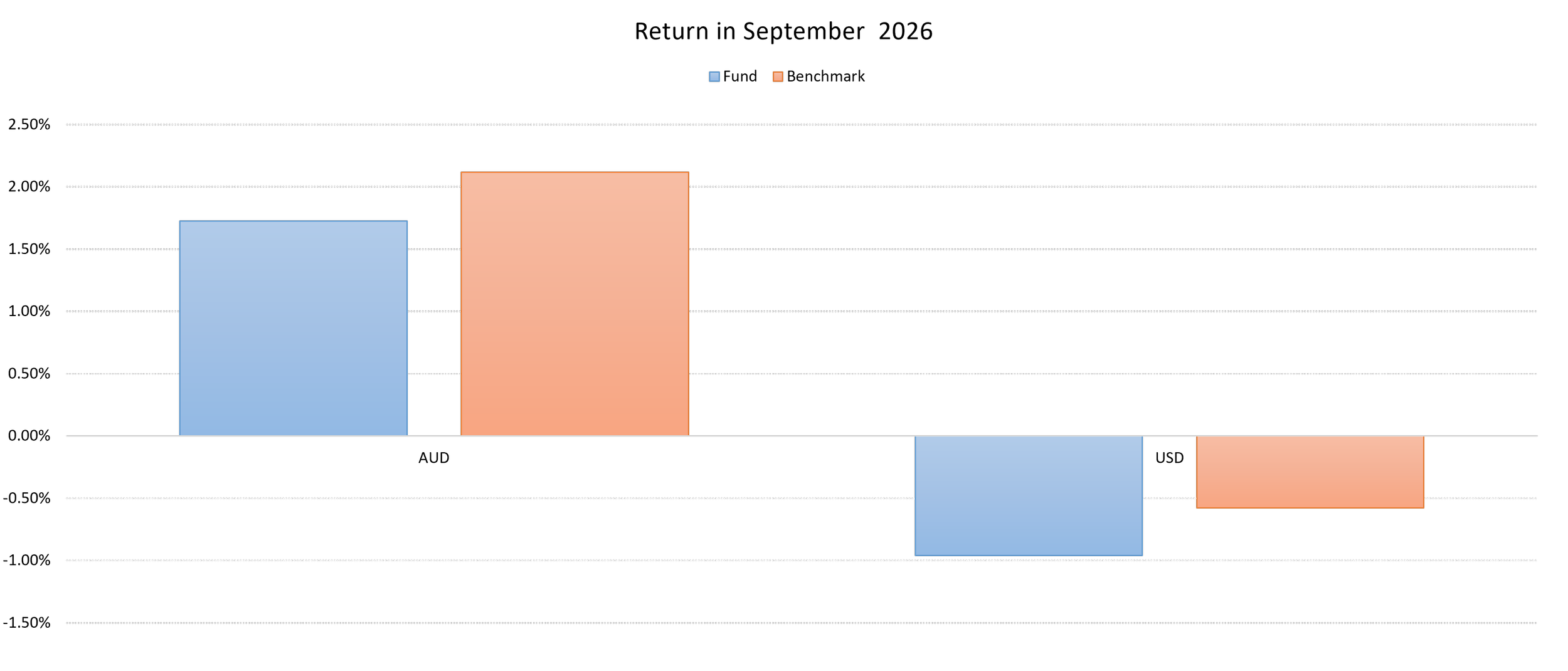
Otso’s US fund performed reasonably well in September, albeit marginally below the benchmark. We delivered 1.72% in AUD terms (vs benchmark of 2.12%) and -0.96% in USD terms (vs benchmark of -0.58%). These returns are net of fees.
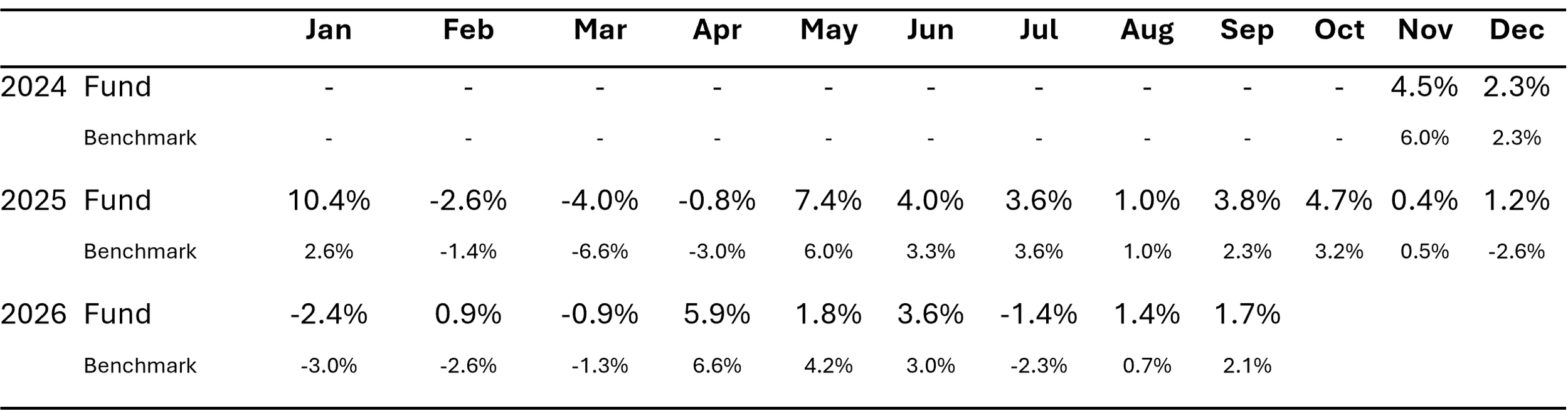
Over time, we have generally outperformed the market (see performance below, net of fees).
In September, the broader market fell marginally. However, the AUD depreciated (i.e., USD appreciated), meaning that performance was positive overall.
What happened in September
September 2026 exposed a widening divide in U.S. financial markets. Large technology companies helped support the major stock indexes, while smaller companies and much of the broader market suffered substantial losses. Rising Treasury yields, persistent inflation, and the Federal Reserve’s return to interest rate increases created a more challenging investment environment. In price terms, the S&P 500 declined 0.45%, the Dow Jones Industrial Average fell 4.29%, and the Russell 2000 dropped 5.40%. The Nasdaq Composite gained 1.86%. Despite September’s setback, the S&P 500 remained up 11.77% for the year.
The divergence was particularly clear when comparing the conventional S&P 500 with its equal-weight counterpart, which gives each constituent a similar allocation. Including dividends, the equal-weight index fell 4.8%, revealing weakness that the largest companies’ substantial index weights helped obscure. Sector performance reinforced this picture. Information technology and communication services were the only S&P 500 sectors to advance, gaining 4.5% and 4.3%, respectively. Financials fell 7.2%, materials declined 6.7%, and real estate lost 6.1%. These results pointed to a market increasingly dependent on a narrow group of technology leaders.
Monetary policy was central to the month’s developments. On September 16, the Federal Reserve unanimously raised its target interest rate by 0.25 percentage points to a range of 3.75% to 4.00%, its first increase since July 2023. The Fed described economic activity as expanding solidly, with resilient domestic spending and robust capital investment, while emphasizing that inflation remained elevated. The decision underscored its willingness to tighten policy even as higher borrowing costs weighed on financial markets.
Economic releases during September helped explain that stance. The August employment report showed payroll growth of 162,000 and an unemployment rate holding at 4.1%. Consumer spending also remained firm. August personal consumption expenditures increased 0.9% in nominal terms and 0.6% after adjusting for inflation. Taken together, these figures suggested that households and employers retained considerable momentum. For markets, that resilience had competing implications: it supported corporate revenue prospects while giving the Fed greater scope to maintain restrictive policy.
Inflation data presented a mixed picture. August’s Consumer Price Index, released in September, increased 0.4% from the previous month and 3.4% from a year earlier. Gasoline prices rose 3.9%, accounting for more than one-third of the monthly increase. Core CPI, which excludes food and energy, rose 0.3% during August and 2.4% over the year. Energy therefore remained an important source of pressure, even as some underlying inflation measures showed improvement.
The month ended with a more encouraging reading from the Fed’s preferred inflation framework. Data released September 30 showed that August core personal consumption expenditures inflation was 3.0% year over year, with a monthly increase of 0.2%. Headline PCE inflation was 3.4%. These figures left inflation above the Fed’s 2% objective, but the softer core reading reduced expectations of an immediate follow-up rate increase.
The bond market experienced a much larger adjustment than the S&P 500’s modest decline suggested. The 10-year Treasury yield rose 54 basis points, from 4.75% to 5.29%, its largest monthly increase in four years. Higher yields reduced existing bond prices and increased the discount rates applied to corporate earnings. Heavy government and corporate borrowing added to the pressure from inflation and resilient growth. For borrowers, rising Treasury yields also increased the benchmark cost against which many corporate loans and bonds are priced. The Bloomberg U.S. Aggregate Bond Index lost 2.6%, while the Bloomberg High Yield Index declined 2.5%, demonstrating that losses extended across different credit categories.
Energy and currency markets added further complications. Continued U.S.-Iran tensions and uncertainty surrounding Middle East supply supported oil prices. U.S. crude oil futures rose approximately 5.1% to $90.55 per barrel. The U.S. Dollar Index gained about 2.1%, while gold futures fell approximately 6.9%. Higher energy prices threatened household purchasing power and business margins, while the stronger dollar and rising yields created a difficult backdrop for gold. For U.S. multinationals, dollar appreciation can also reduce the value of overseas earnings when translated back into dollars, creating an additional potential headwind.
Artificial intelligence remained a powerful source of equity demand. Investors continued to favor selected technology and infrastructure businesses, helping the Nasdaq-100 deliver a total return of 3.3%. Yet the AI investment cycle also contributed to financing demands as companies expanded infrastructure. This created an important tension: enthusiasm about future earnings supported certain stocks, while the capital required to pursue those opportunities added to broader borrowing needs.
As September ended, the central investment question was whether earnings growth could withstand more expensive capital. The month’s combination of narrow equity leadership and simultaneous stock and bond losses highlighted the importance of looking beyond headline indexes. A practical implication is that balance sheet strength, refinancing requirements, and the credibility of earnings expectations deserved closer attention as investors assessed the final quarter.